UX Design from Gratitude to Sustainability: Why It Should Matter
I'm not going to lie — writing an article for a platform that is filled with experienced people and knowledge, when I'm still at the very beginning of building my career, can feel quite intimidating. It was with this same mindset that I enrolled in an optional course taught by Emma Bawden, designed to make its students find their own Ikigai.
I'm certain I'm not the best person to employ the meaning of the word, and I encourage the reader to deeply search the importance it holds for each one of us. From my own personal understanding, "Ikigai" equals "reason for being" — a combination of everything that brings me joy, that can fulfil me both financially and personally, as well as contribute to a better world. I, more than anyone, was not expecting the results. As I said, I am still young, so finding my Ikigai sounded slightly like an impossible mission.
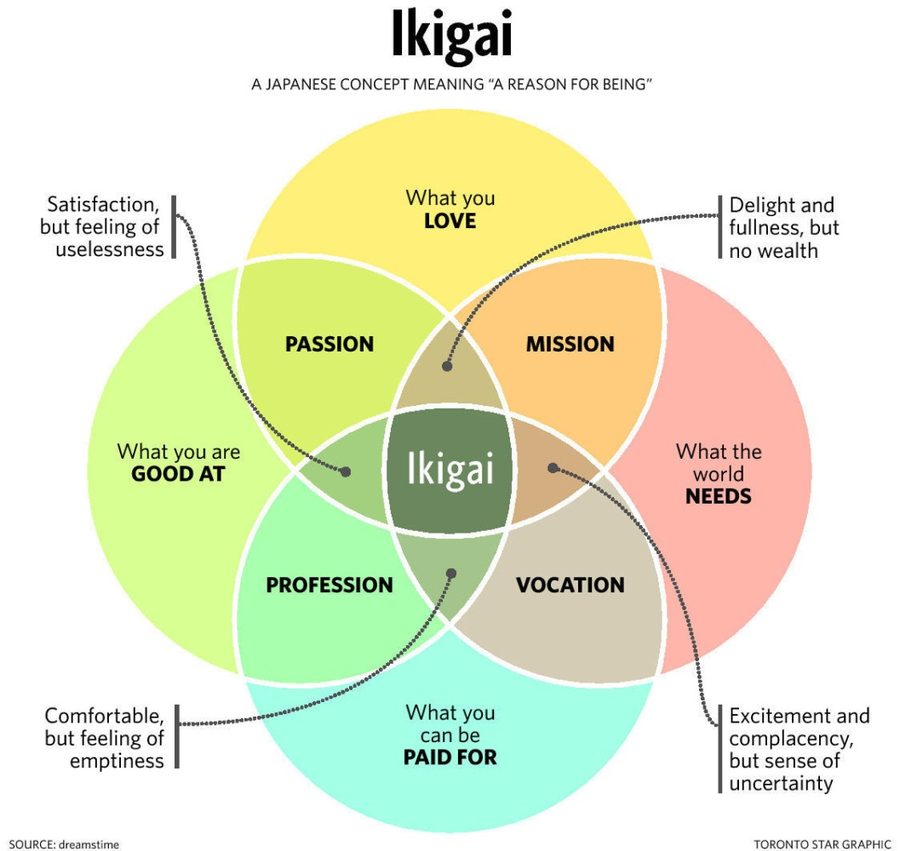
No, I haven't found my Ikigai yet, but I find myself much closer to finding it than a few months ago. More than that, I came out with a lot to say to the world.
The strength I didn't expect
While completing this course, I came across sustainability, and I never expected the impact it has on my daily life. Without noticing, all my conversations about "what the world needs" would end up on this same topic, and it was the passion with which I affirmed my words that made me think twice about it.
Looking back, it makes total sense. At the very beginning, we were asked to discover our top 3 character strengths. My results came as the following: gratitude, love of learning, and curiosity. Now, the last two didn't come as a surprise, although it was a relief to have the reassurance. After all, my bachelor's in Biochemistry emerged from my curiosity for the unknown and wanting to know more. Gratitude, however, really turned my brain into a knot.
Sustainability and gratitude are, in a fair way, completely related.
It is when I'm looking at a beautiful sunset or taking in the view that I subconsciously become so grateful for the world around me. So, shouldn't it mean that my gratitude leads to more sustainable practices?
I wrapped my head around this idea, having no idea that it would very soon come to mind again.
Designing for the 21st century
I've been a great fan of Don Norman's work for a while now. This doesn't come across as anything unique, since Norman has become for a few decades a legend for every designer across the world. But it was my love for his knowledge that led me to enrol in an online course lectured by the one and only at the Interaction Design Foundation. Entitled "Design for the 21st Century", the course flows through different topics and ideas, warning students that designing to solve the "symptoms" isn't the goal — but instead, designing for the broader picture.
In the past, designers often focused on aesthetics and functionality alone. But today, we must consider the lifecycle of products, their impact on the environment, and the well-being of users. This means designing products that are not just aesthetically pleasing and functional, but also sustainable and mindful of the environment.
I was mesmerised by Norman's simplicity but still alarming teaching. I felt as if the course had been made specifically for me. I stared for hours reviewing the classes, drinking in every detail, and wondering how I can compete against a world where the vast majority still doesn't take sustainability as the end goal. How designers hold so much potential over the topic's solutions, yet feel powerless when it's time to take the decision to act.
I still haven't found an answer.
A generation with the power to differentiate
We are a generation of designers bombarded with worldwide information every day, whether it's on the news or just scrolling through social media. We are a generation overstimulated by the constant struggles happening everywhere — whether it's pollution, global warming, the economy, or even all three combined. We are a generation of designers that has the power to differentiate the world through our work.
We have the chance to get on top, never stop learning and growing, and actually make a difference. But we can't do this alone. We are right here, minds at the ready, ideas flowing.
I can never mention Steve Jobs enough when he said, and I quote, "the people who are crazy enough to think they can change the world, are the ones who do."
my first ever article — years later I still stand by it