2025 · Lead Designer · Case Study No. 1
AI Storyteller Interface
Turning AI-generated market insights from a black box into something people actually trust — and act on.
The first version of Storyteller was deliberately simple: a title, an AI-generated summary, and four insight categories — patterns, momentum, trend, and price — for the Technical Insight product.
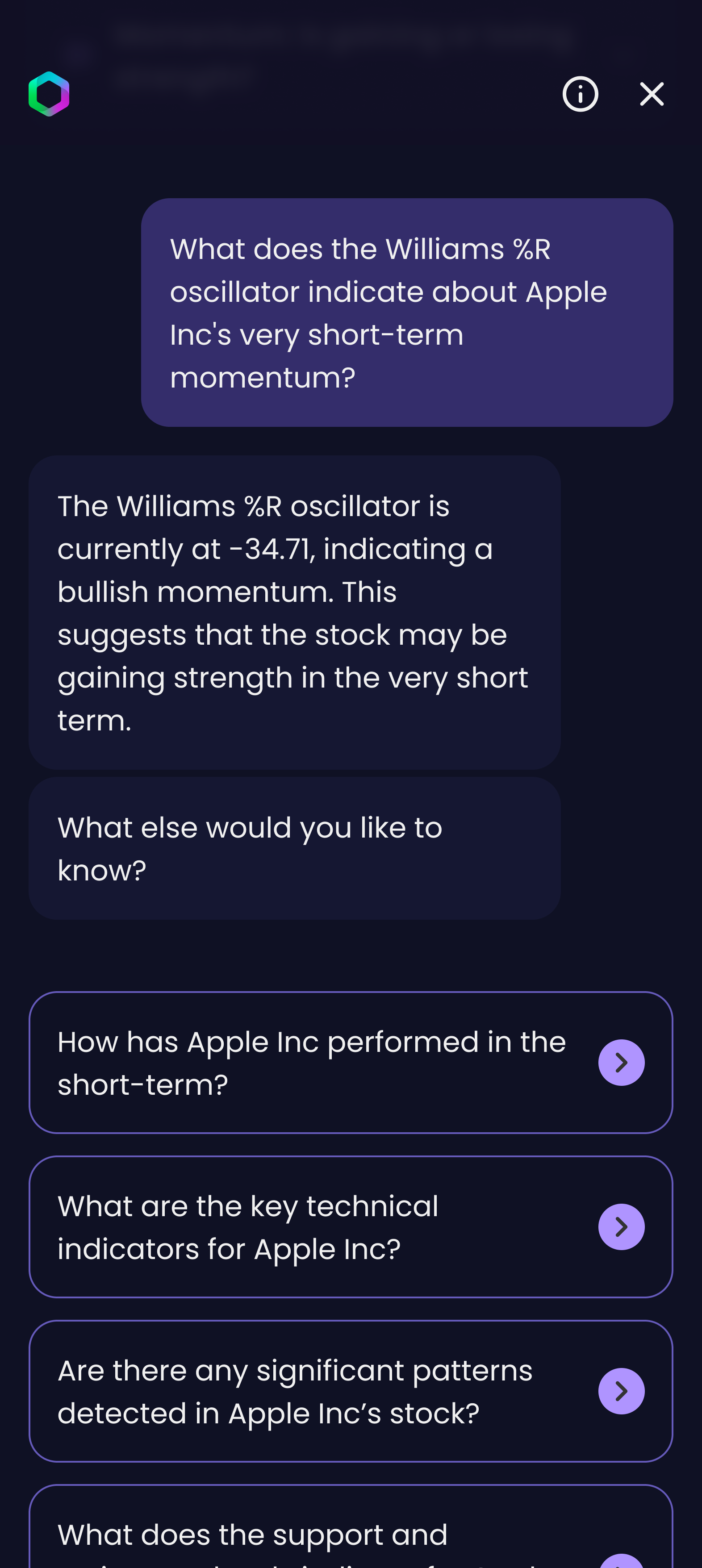
Instead of an open chat, it used closed prompts: five pre-generated questions the user could choose from. No free-form input. This was a compliance-driven choice — in finance, an open text field is an open door for AI hallucinations that go unchallenged.
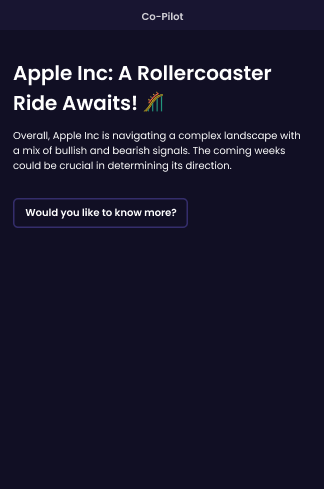 V1 · summary card
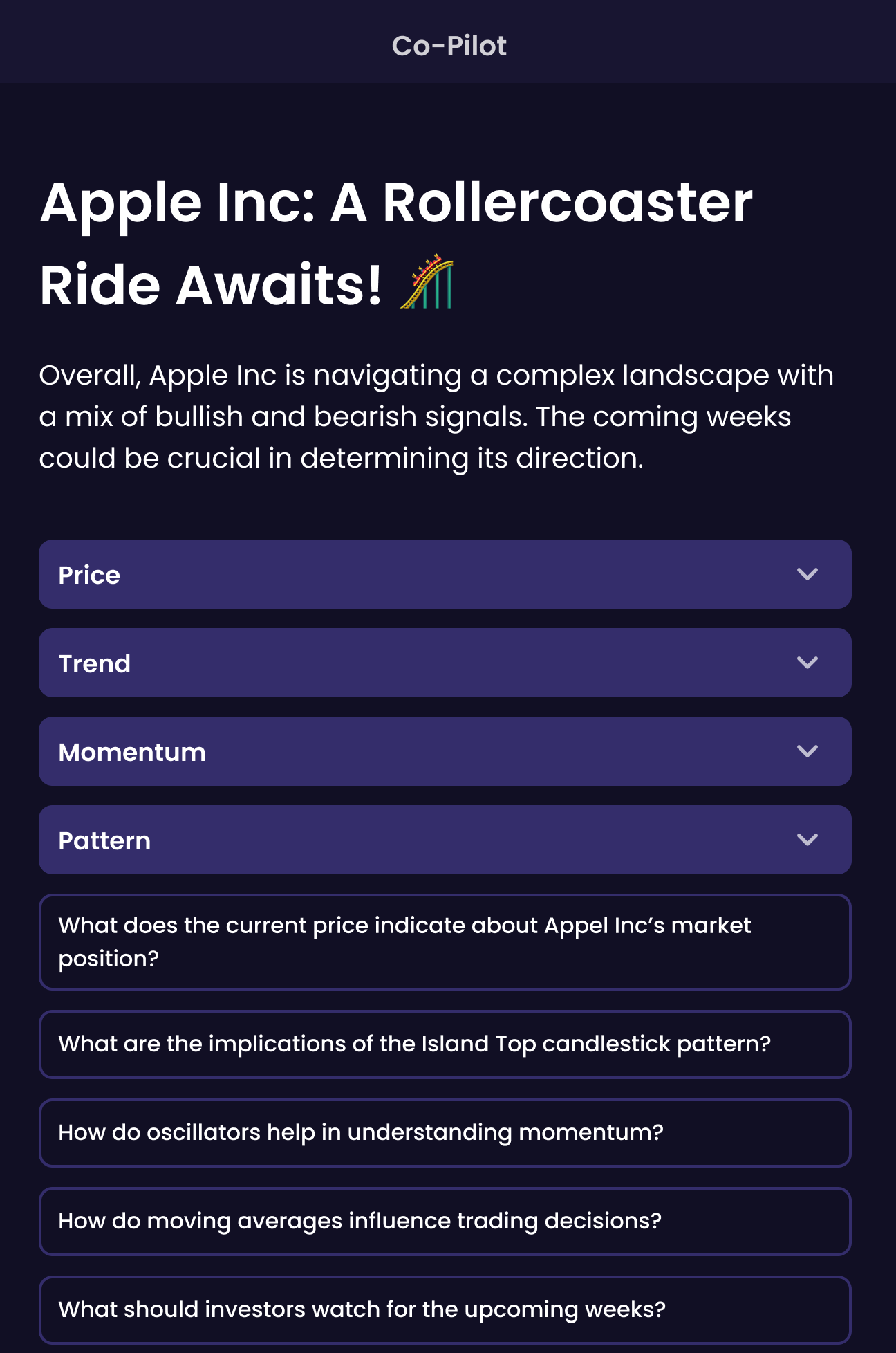 V1 · closed prompts
Users were receiving the insights. They just weren't acting on them.
The outputs were too ambiguous, felt unverifiable, or simply didn't surface at the right moment in the workflow. An insight nobody acts on is decoration.
Goals:
- Deliver actionable insights at the right moment.
- Ensure compliance and trustworthiness — no unchallenged hallucinations.
- Streamline content delivery.
- Increase user engagement.
I prioritised trust and clarity above everything else. In a high-stakes financial context, a user who misreads an AI output doesn't just disengage — they make costly decisions. Every design choice was filtered through one question:
Rejecting the chat paradigm
A conversational interface felt intuitive at first, but it puts the burden on the user to formulate the right question — and we were designing for both finance newcomers and professional analysts. Free-form input in finance creates inconsistency and lets hallucinations slip through unchallenged. I pushed for a guided, pre-structured interface instead.
Defending the transparency layers
Confidence indicators, source attribution, and reasoning trails were challenged as "adding noise." I argued they were the foundation of trust: without them, the AI is a black box — and users opt out of black boxes.
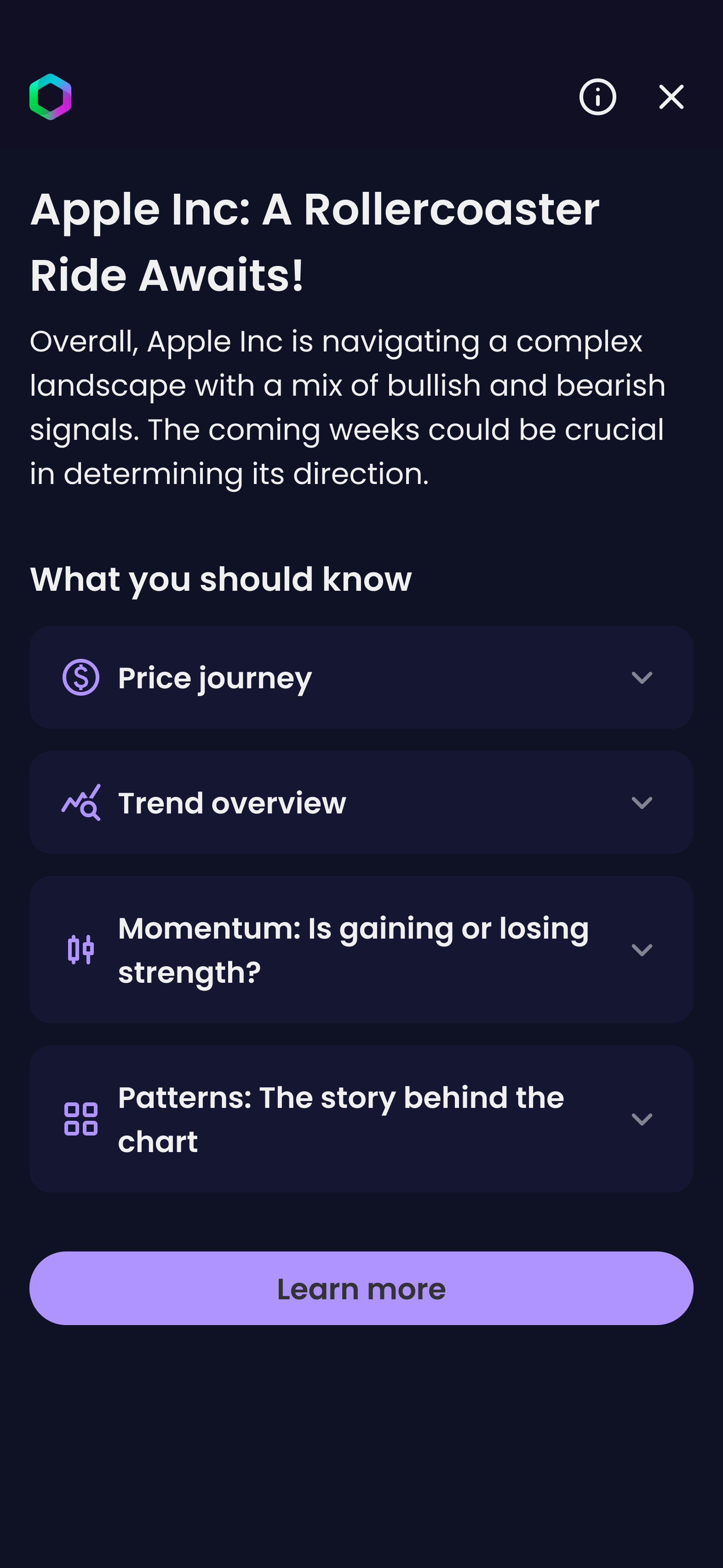
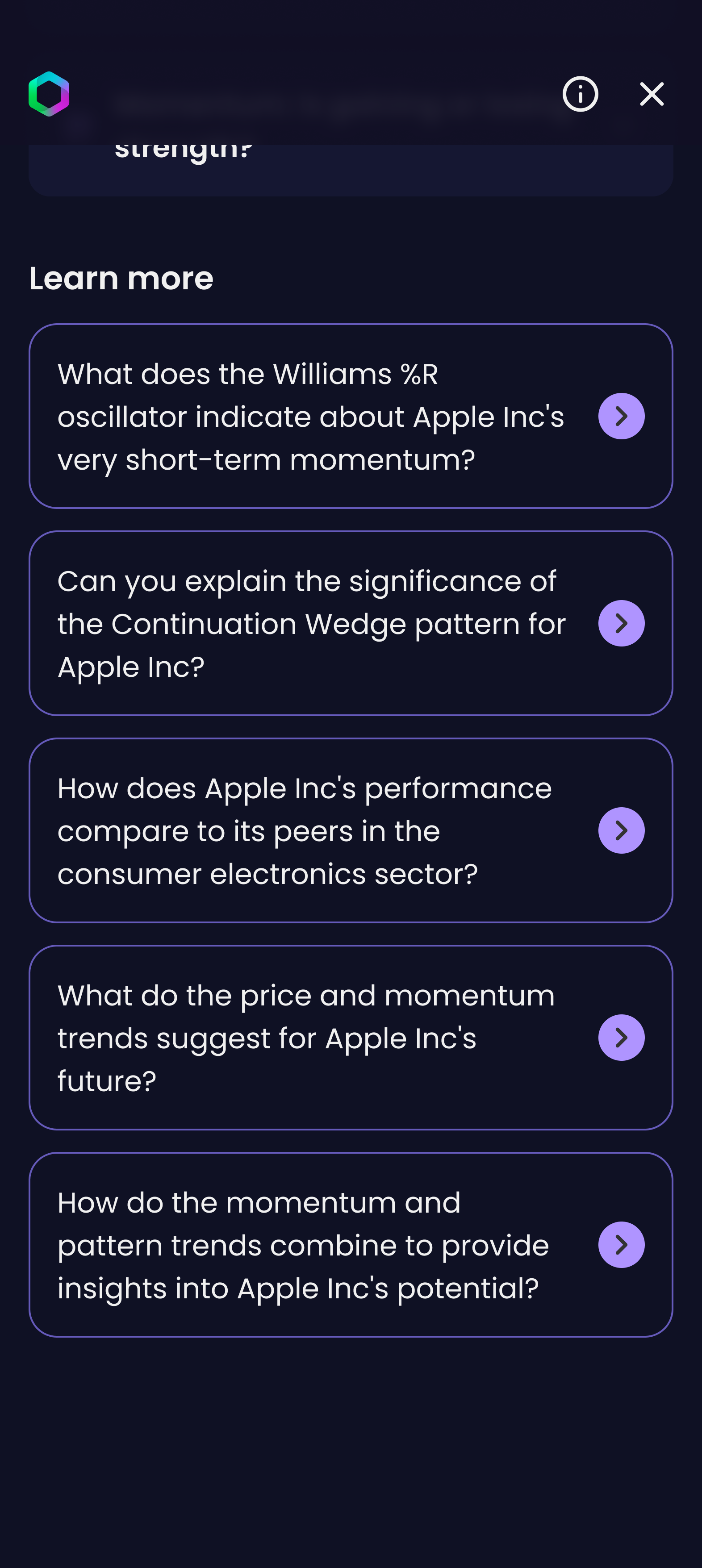
Users didn't know what to ask, or where to start
A set of pre-selected, contextually-aware prompts, surfaced at the right moment in the workflow.
Cognitive load dropped significantly. Users engaged with insights they would previously have skipped.
AI outputs felt untrustworthy
Users couldn't verify the reasoning behind an insight.
Confidence indicators, source citations, and collapsible reasoning trails on every insight card.
Compliance approved the feature faster — and retention grew 5× among users who interacted with the transparency layer.
The content was overwhelming
Dense text exhausted readers before they could act on anything.
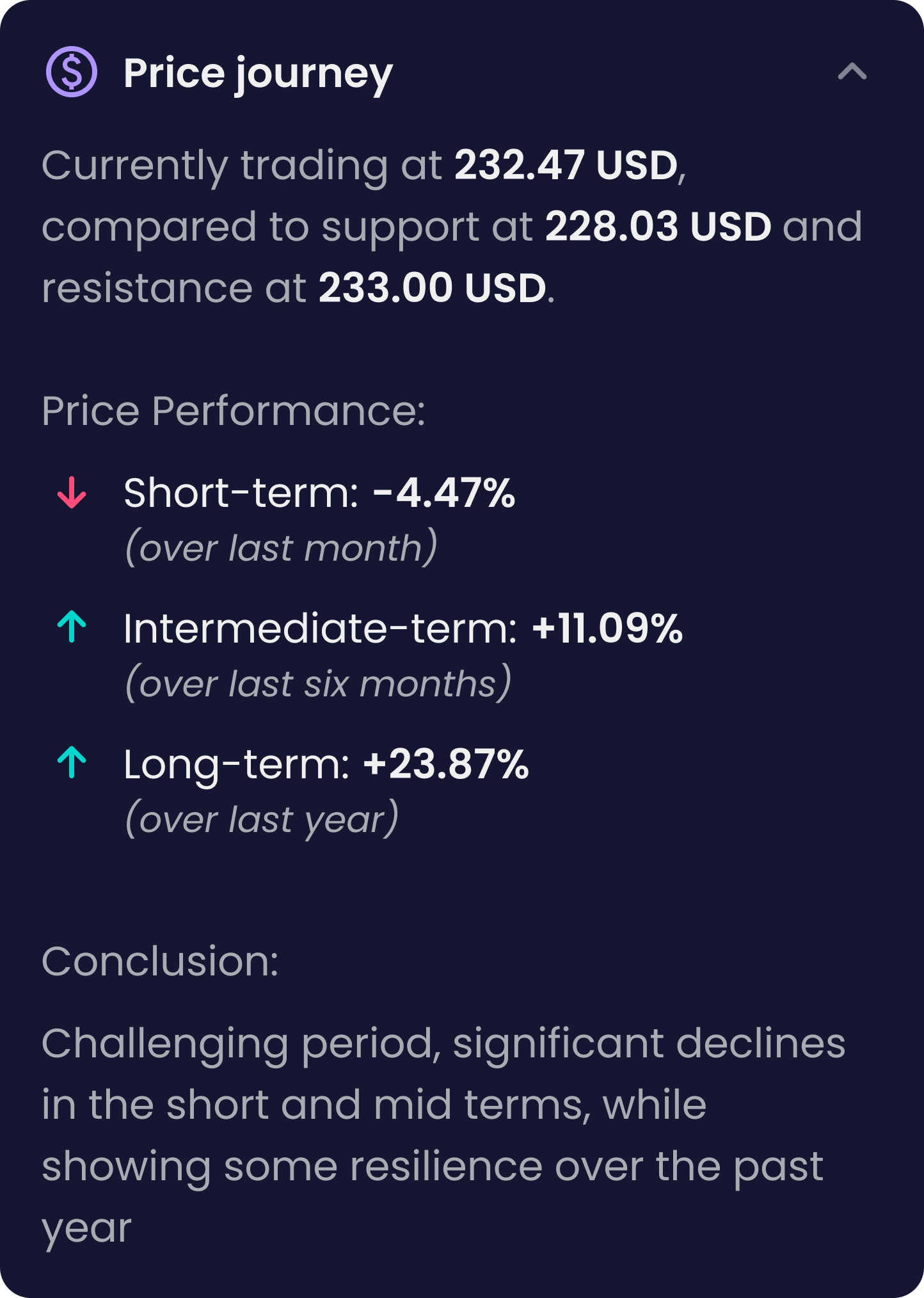
A visually balanced interface: bearish/bullish colour coding paired with directional visuals, so users instantly associate meaning — up or down — without reading dense copy.
+19% engagement across the feature and a measurable drop in mid-flow abandonment.
Simplicity vs. scope
The original vision was a minimal, single-action interface. As compliance requirements and data complexity grew, we layered in more structure. The result is slightly more complex than ideal — but it serves the real use case.
Speed vs. transparency
Loading transparency metadata (sources, confidence) adds latency. We negotiated with engineering on what loads eagerly vs. on demand; some transparency features live behind an expand interaction rather than being always visible.
Personalisation vs. consistency
I wanted prompts tailored to each user's portfolio and behaviour. We deprioritised it in favour of a consistent baseline that could ship and be measured. Personalisation stays on the roadmap.
Storyteller outgrew its first home. It has since been extended to five more products, each tailored to its context — not all keep the closed prompts, but the visual language stayed.
- Technical Insight where it began
- News & Sentiment
- Options Insight
- Fundamentals
- Technical Views
- Economic Insight soon
When AI earns trust through transparency, engagement follows — you don't have to ask for it.
Anna ✎